Power electronics
Power electronics
Electroplating rectifiers
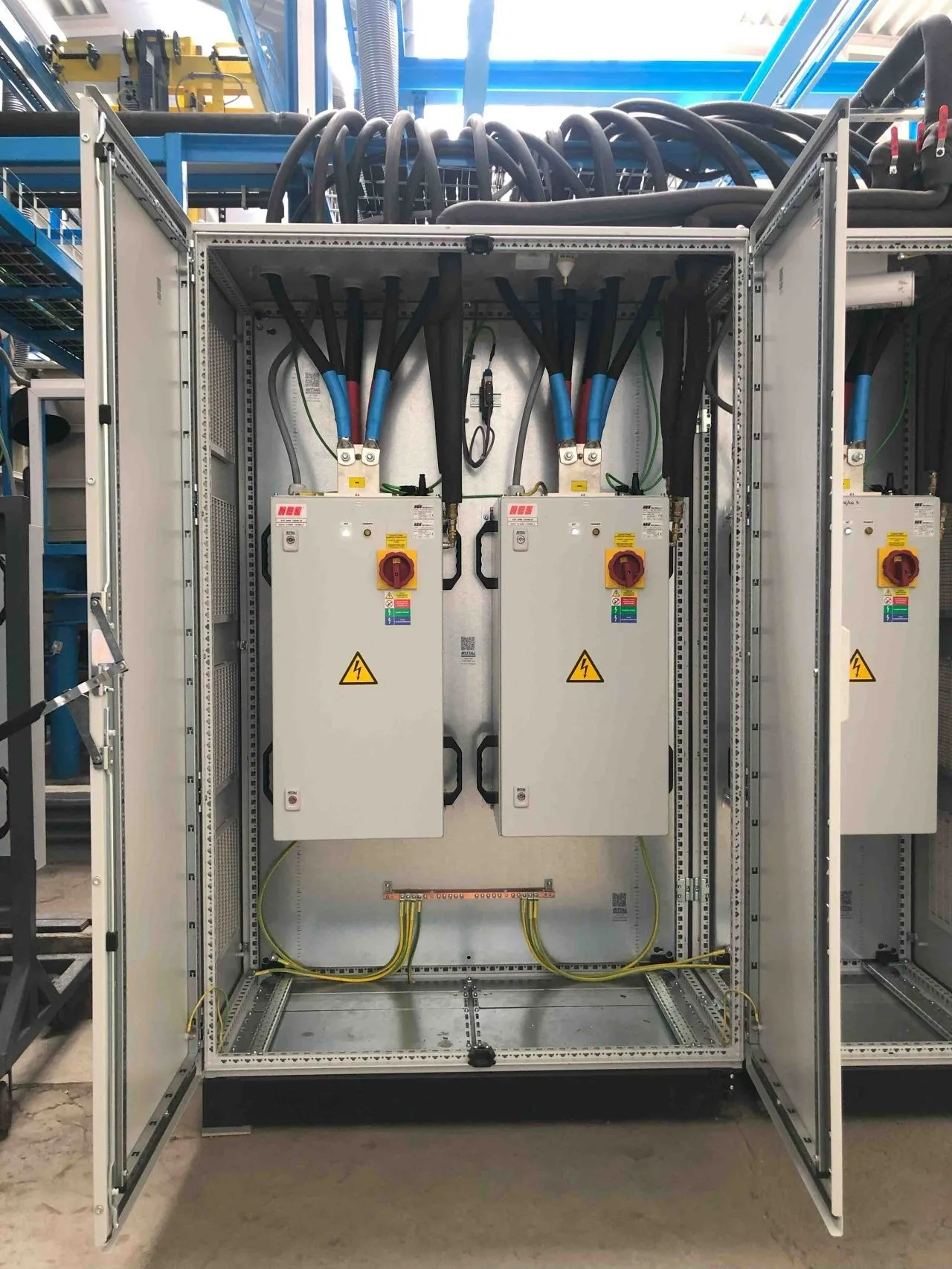
Power units for plating lines, installed and serviced.
SZ-series switched-mode rectifiers with IGBTs and medium-frequency power transfer replace thyristor rectifiers — up to 92 % efficiency, ripple below 1 % and 1 – 100 % control, from a few hundred watts up to 10,000 A. We deliver them as a complete service from design to support; a new generation based on SiC technology comes to market in 2026.
What the equipment does
01
Features
- IGBT switched-mode design with a medium-frequency transformer
- Up to 92 % efficiency, ripple below 1 %
- Output control 1 – 100 %
- Lower energy use than thyristor rectifiers
- Installation, parameter setting and commissioning
- Maintenance, diagnostics, warranty and post-warranty service
Technical data
02
Parameters and applications
- Series
- SZ · SZS
- Efficiency
- up to 92 %
- Ripple
- ≤ 1 %
- Output
- up to 10,000 A / 15 V
- New
- SiC generation, 2026
Applications
- Electroplating shops
- Surface finishing
- Engineering production
We prepare exact ratings and variants to your brief.
References
03
Where you will find them
More solutions
Power electronics
- Cathodic protection Rectifiers and complete stations with remote supervision and GPS sync.
- Electroplating Switched-mode rectifiers for plating lines, installed and serviced.
- Railway electronics Control systems, traction and auxiliary electronics for vehicles since 1992.
- Test benches & equipment HV supplies for vehicle test rooms and circuit-breaker testers.
- Chargers & dischargers Programmable charging, capacity tests and remote battery monitoring.
- AC/DC power supplies Switched-mode AC/DC supplies, DC/DC converters, inverters and DC UPS.
- Transducers Measuring transducers, isolation amplifiers, insulation meters, relays.
- Contactless power transfer Powering moving and sealed equipment without contacts or cables.
- Custom solutions Science, research and defence, single crystals, plasma, supercapacitors.
Have a project on the table?
Need exact ratings?
Tell us the voltage, current and the environment the unit will work in — we will prepare a solution.